

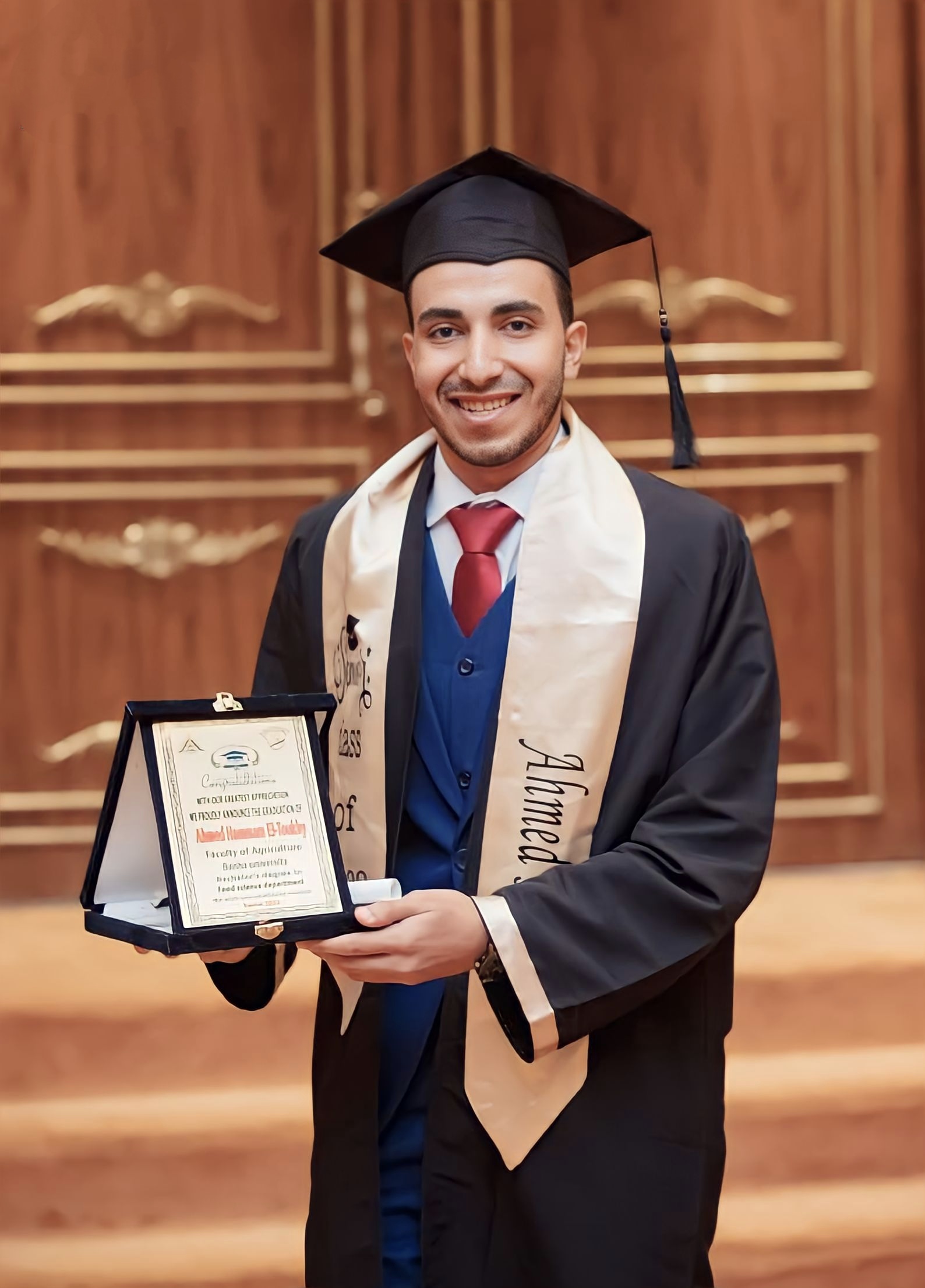
احمد همام الطوخى محمد بهلول
مدرس مساعد
Formulation and Characterization of Nutrient-Dense Medjool Date Bars: Integration of Proteins, Bioactives, and Processing Stability for Functional Snack Innovation
Foods • 2026
معلومات البحث
المؤلفون
Ahmed H. Bahloul; Mahmoud H. Mahmoud; Galal A. Ghazal; Hassan Barakat
الكلمات المفتاحية
Medjool date; energy bars; nutritional quality; phytochemical characterization; texture analysis; food supply
المجلة العلمية
Foods
الناشر
MDPI
المجلد
Not Available
العدد
Not Available
الصفحات
Not Available
publication.type
International
رابط البحث
Open Link
المواد المرفقة
Not Available
الملخص
This investigation focused on developing nutrient-dense Medjool date-based bars (MDBs) formulated with Medjool date paste, milk protein concentrate, whey proteins, and other functional ingredients. Comprehensive proximate analysis, mineral profiling, amino acid determination, and instrumental assessments, including color measurement, scanning electron microscopy, differential scanning calorimetry, and texture analysis, were performed, followed by organoleptic evaluation. Medjool date paste served as the primary carbohydrate source (76.44%), while whey protein isolate and milk protein concentrate contributed substantially to the protein fraction (89.26% and 81.62%, respectively). The resulting bars contained 19.32–26.78% crude protein, 10.96% fat, and 12.35–12.71% moisture, delivering 414.72–416.04 Kcal 100 g−1. Sugar profiles remained consistent across formulations (total sugars: 36.77–36.98%), with appreciable mineral content including potassium (884–923 mg 100 g−1), calcium (418–585 mg 100 g−1), and phosphorus (402–459 mg 100 g−1). The essential amino acid composition equaled or surpassed that of hen’s egg, establishing the product as a superior protein source. Antioxidant analysis demonstrated total phenolic content of 452.22–554.12 mg GAE 100 g−1 and total flavonoids of 358.06–374.24 mg QE 100 g−1, with consistent radical scavenging capacity, reduced browning via protein–polyphenol binding (ΔG −58 to −72 kJ mol−1), a balanced texture (hardness 157–189 N), and consistent sensory scores (87.63–93.28% acceptability), without significant differences among formulations. Molecular docking confirmed β-lactoglobulin’s tight antioxidant shielding and caseinate’s flexible bioavailability boost, yielding shelf-stable functional snacks that advance date palm valorization. The results demonstrate the successful development of functional MDBs with an excellent nutritional profile and strong panelist acceptance.