

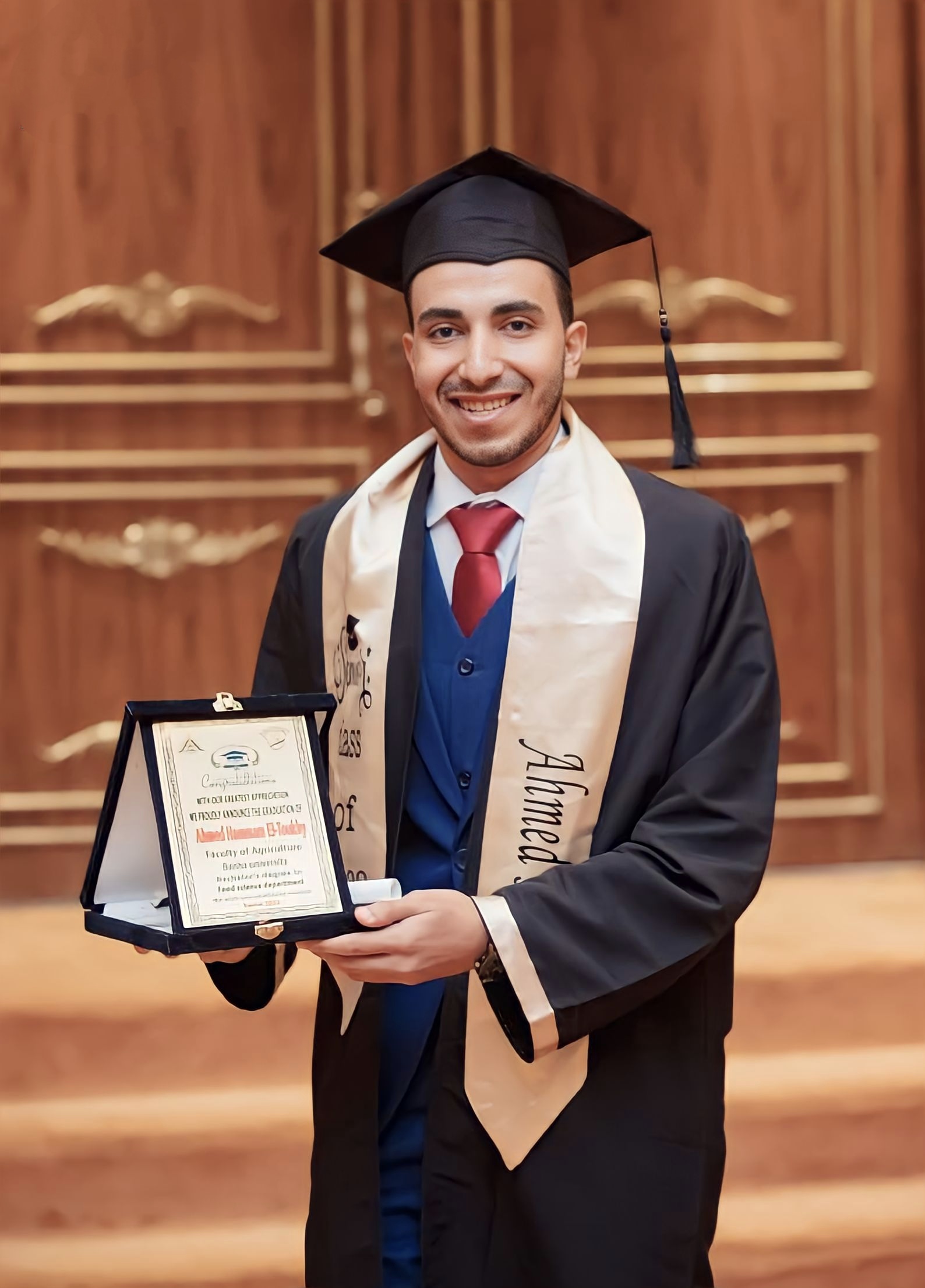
احمد همام الطوخى محمد بهلول
مدرس مساعد
Development, nutritional profiling, physicochemical properties, computational protein-polyphenol interactions, and sensory properties of high-energy Medjool date bars
Frontiers in Nutrition • 2026
معلومات البحث
المؤلفون
Not Available
الكلمات المفتاحية
Not Available
المجلة العلمية
Frontiers in Nutrition
الناشر
Frontiers Media S.A.
المجلد
Not Available
العدد
Not Available
الصفحات
Not Available
publication.type
International
رابط البحث
Open Link
المواد المرفقة
Not Available
الملخص
Background: Health-promoting foods that support healthy aging are attracting growing interest, and Medjool dates, energy-dense and rich in bioactives, remain underutilized in protein-based functional snacks.Objectives: The current study aims to develop and assess high-protein energy bars made with Medjool date paste, focusing on their nutritional, phytochemical, stability, and physicochemical properties.Methods: Three Medjool date–based protein bars (F1–F3) were formulated with increasing Medjool paste (45–55%) and decreasing oats (10–0%), alongside constant milk protein concentrate–whey protein isolate (20%) and complementary mix (25%), and were characterized for composition, phytochemicals and antioxidant activity, protein–polyphenol interactions (docking), microstructure, thermal behavior, color, texture, and sensory attributes.Results: Proximate composition analysis demonstrated a high nutritional profile of the fortified date bars. Moisture ranged from 11.81–13.64%, protein 22.98–24.38%, and available carbohydrates 53.27–57.01%. Fat content was 11.20–12.25%, with dietary fiber at 5.84–6.91% and ash at 2.96–3.18%. Total, reducing, and non-reducing sugars were 33.22–41.18%, 31.06–38.86%, and 2.05–2.20%. The resulting energy value of the nutritional date bars remained consistent across formulations (420.76–422.30 kcal per 100 g), indicating overall nutrient density. The antioxidant evaluation revealed total phenolic contents ranging from 562.48 to 619.26 mg GAE per 100 g, and total flavonoid concentrations from 383.42 to 395.43 mg QE per 100 g, indicating stable radical-scavenging performance across all treatments. Molecular docking revealed that epicatechin binds specifically to β-lactoglobulin via hydrophobic and π-π stacking interactions, and to sodium caseinate via ionic and H-bond interactions. Molecular docking suggested specific binding between epicatechin and β-lactoglobulin/sodium caseinate via hydrophobic and hydrogen-bond interactions, indicating potential stabilization of polyphenols in the protein-enriched matrix. The instrumental color assessment showed a uniform brownish-yellow hue, whereas sensory testing yielded consistently high acceptability ratings (86.91–87.82) with no significant variation among the developed formulations. Texture profile analysis showed formulation-specific texture in MEBs: F2 was hardest (199 N), F1 was most cohesive/adhesive (0.69/−0.45), and F3 was springiest/chewiest (0.91/93), optimizing sensory appeal.Conclusion: The formulated Medjool energy bars were successfully developed, showing a strong nutritional profile, high consumer acceptance, and promise as scalable, stable, nutrient-dense products for athletes and health-conscious consumers.