

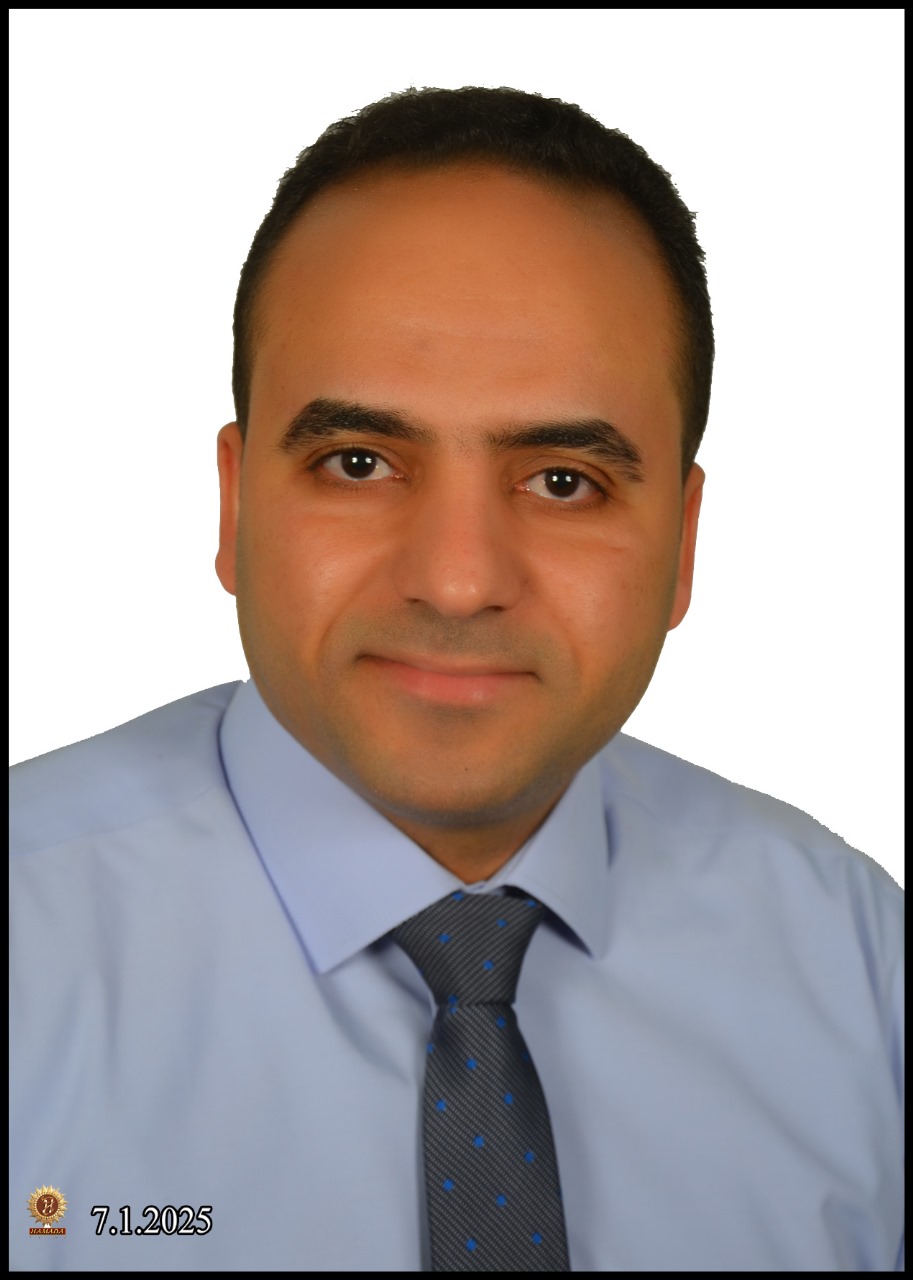
احمد سعيد فتحي يوسف أبو زيد
أستاذ
Abuzaid, A.S, Jahin, H.S. 2019. Profile distribution and source identification of potentially toxic elements in north Nile Delta, Egypt. Soil and Sediment Contamination: An International Journal, 28(6):582-600. DOI: https://doi.org/10.1080/15320383.2019.1637818
Soil and Sediment Contamination • 2019
معلومات البحث
المؤلفون
A S Abuzaid; H S Jahin
الكلمات المفتاحية
PCA; CA; Toxic Elements; Vertical Distribution; North Nile Delta
المجلة العلمية
Soil and Sediment Contamination
الناشر
Taylor & Francis Group, LLC
المجلد
28
العدد
6
الصفحات
582–600
publication.type
International
رابط البحث
Open Link
المواد المرفقة
Not Available
الملخص
Vertical distribution and source appointment of potentially toxic
elements (PTEs) provide a deeper vision for soil contamination.
Contamination factor (CF), contamination degree (CD), enrichment
factor (EF), principal component analysis (PCA), and cluster analysis
(CA) were used for soil contamination assessment in north Nile Delta,
Egypt. Twenty-one soil profiles representing main geomorphic units
were dug, and 63 soil samples were collected at three depth intervals
(0–30, 30–60 and 60–90 cm). Mean values of the three layers showed
that Al, Fe, Mn, Cr, Cu, Pb, Mo, and V did not exceed average natural
content of the Earth’s crust, while As, Cd, Co, Ni, and Zn exceeded
that limit, except in the sand sheets unit. The studied elements
showed irregular vertical distribution trend, except Cr, Ni, and Mo.
Both Cr and Ni showed a downward migration, while Mo accumulated
in the topsoil. Based on mean values, the CF indicated low
contamination with Cr, Cu, Pb, Mn, Mo and V, moderate contamination
with Cd and Zn, considerable contamination with As, Co, and Ni,
while the CD was low to considerable. Furthermore, the EF indicated
safe degree for Cr, Cu, Pb, Mo and V, deficiency to a minimal degree
for Cd and Zn, while moderate degree for As, Co, and Ni. The PCA
and CA indicated that soil parent materials controlled Al, Fe, Mn, Cu,
Cr, Co, Pb, Ni, Mo, and V, while agricultural activities controlled As, Cd
and Zn. Similar investigations should be considered in various
regions in Egypt to verify potential sources of PTEs and to manage
pollution of agricultural fields.