

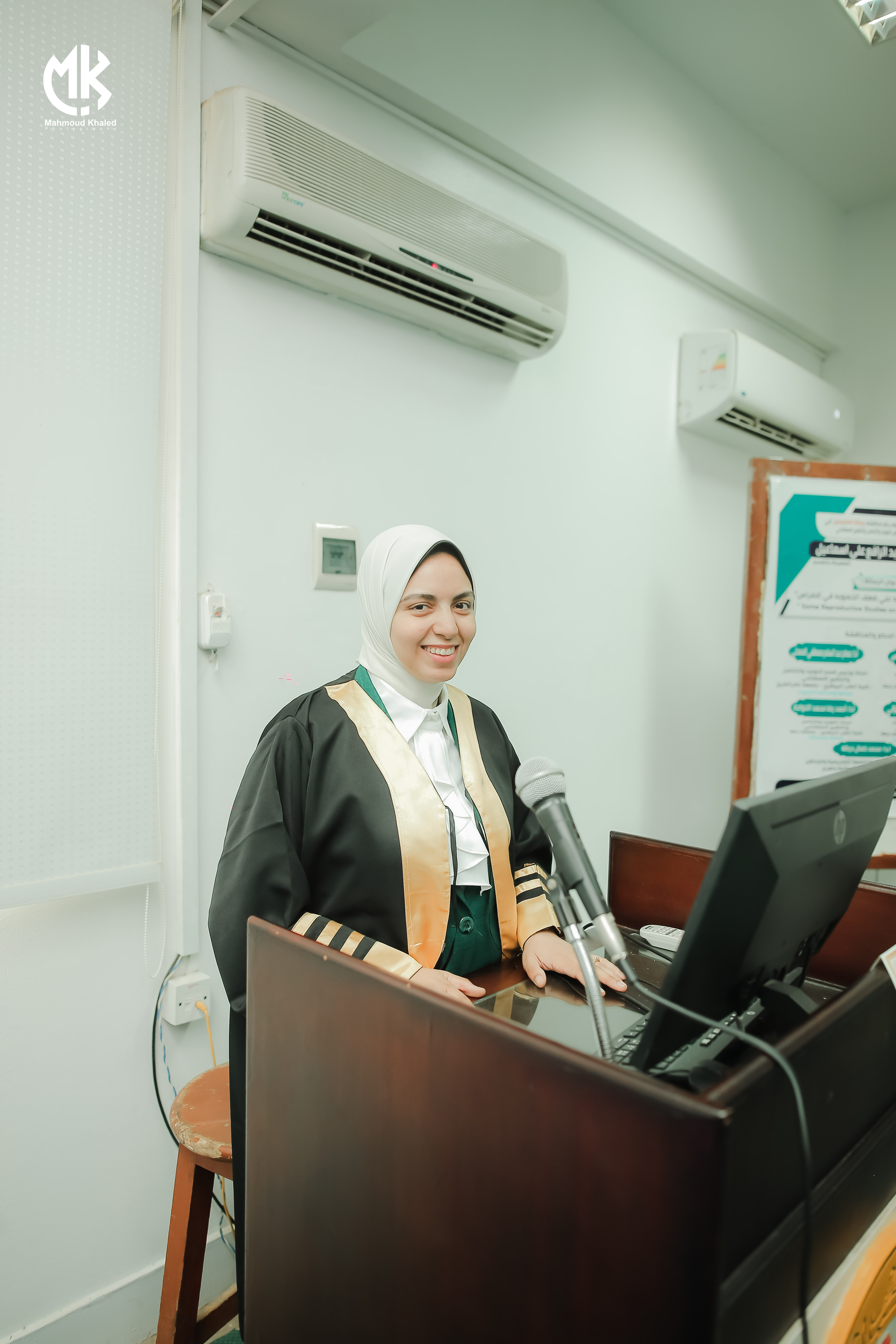
تغريد عبدالرافع علي إسماعيل
مدرس مساعد
Diagnosis of Endometritis in Arabian Mares Using Ultrasonography and Microbial Isolation with Lipid Peroxidation and Antioxidant Assessment
Egyptian Journal of Veterinary Sciences • 2025
معلومات البحث
المؤلفون
Taghreed A.A. Esmail1
, Mahmoud E.A. Abouelroos1
, Hanaa A.E. Asfour2
,
Ahmed R. Elkhawagah1
and Mohamed K. Derbala3
الكلمات المفتاحية
Arabian Mares, Endometritis, Ultrasonography, Microbial isolation, Biochemical
parameters
المجلة العلمية
Egyptian Journal of Veterinary Sciences
الناشر
Not Available
المجلد
Not Available
العدد
Not Available
الصفحات
1-8
publication.type
International
رابط البحث
Not Available
المواد المرفقة
Not Available
الملخص
HE present study aimed to diagnose mare endometritis using ultrasonography, microbial
isolation and identification, in addition to blood biochemical characteristics. The study was
carried out on a total of 22 Arabian mares divided into 2 groups: normal uterus (n=5) and
endometritis (n=17) groups. Depending on age, mares were classified into 2 groups (≤ 10 years and >
10 years). Mares were subjected to ultrasonographic examination to determine uterine wall thickness,
edema, and echogenicity. Endometrial samples (swabs) were collected and cultured for microbial
isolation and identification. Blood samples were collected, and serum was separated and analyzed to
determine the levels of total antioxidant capacity (TAC), nitric oxide (NO), malondialdehyde (MDA),
and interleukin-6 (IL-6). The results revealed an increased incidence of endometritis (P < 0.05) in
older mares (> 10 years, 85.7%) compared to young ones (≤ 10 years, 37.5%). Endometritis increased
the uterine wall thickness, uterine wall echogenicity, and intrauterine fluid (P
isolation and identification, in addition to blood biochemical characteristics. The study was
carried out on a total of 22 Arabian mares divided into 2 groups: normal uterus (n=5) and
endometritis (n=17) groups. Depending on age, mares were classified into 2 groups (≤ 10 years and >
10 years). Mares were subjected to ultrasonographic examination to determine uterine wall thickness,
edema, and echogenicity. Endometrial samples (swabs) were collected and cultured for microbial
isolation and identification. Blood samples were collected, and serum was separated and analyzed to
determine the levels of total antioxidant capacity (TAC), nitric oxide (NO), malondialdehyde (MDA),
and interleukin-6 (IL-6). The results revealed an increased incidence of endometritis (P < 0.05) in
older mares (> 10 years, 85.7%) compared to young ones (≤ 10 years, 37.5%). Endometritis increased
the uterine wall thickness, uterine wall echogenicity, and intrauterine fluid (P