

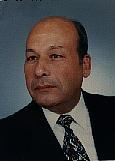
Ahmed Abdel Sattar Shaker
Prof. Emeritus
“ The Effect of Different Tropospheric Models on long Baselines ”, Journal of The National Res. Inst. of Astronomy and Geophysics Ser. No."G21" (Special Issue ).Cairo , Egypt.
• 2010
Publication Information
Authors
Shaker A. , Hamed, M., Saad, A., Mahmoud, S.
Keywords
Not Available
Journal
Not Available
Publisher
Not Available
Volume
Not Available
Issue
Not Available
Pages
Not Available
publication.type
Local
Paper Link
Not Available
Supplementary Materials
Not Available
Abstract
Abstract:
The effect of the atmosphere has been identified as the major problem of long –baseline carrier phase positioning. The effect of the ionosphere, however, can be neutralized with dual – frequency observations. The effect of the troposphere is the challenge of precise positioning and needs to be mitigated in same way. Compensation for the tropospheric biases is often carried out using a standard tropospheric model. Most standard tropospheric models were experimentally derived using a available radiosounds data. In order to determine the best-fit standard tropospheric model with the GPS data, investigations on the impact standard tropospheric models on GPS baseline accuracy are there for needed. This paper aims to compare the GPS base lines results derived from the use of five different standard tropospheric models, and the effect of the ocean tide on the final solution . The concept behind them are presented and discussed.
Key words: - GPS observations, Tropospheric models, scientific software (Bernese)